“Now will I praise the LORD”
Genesis 29:35, KJV · excerpt
Leah knew the ache of longing to be loved. In Genesis 29:31–35, the names she gives her first three sons carry her hope that Jacob will love her and draw close. Yet before that longing is answered, the Lord has already seen her sorrow.
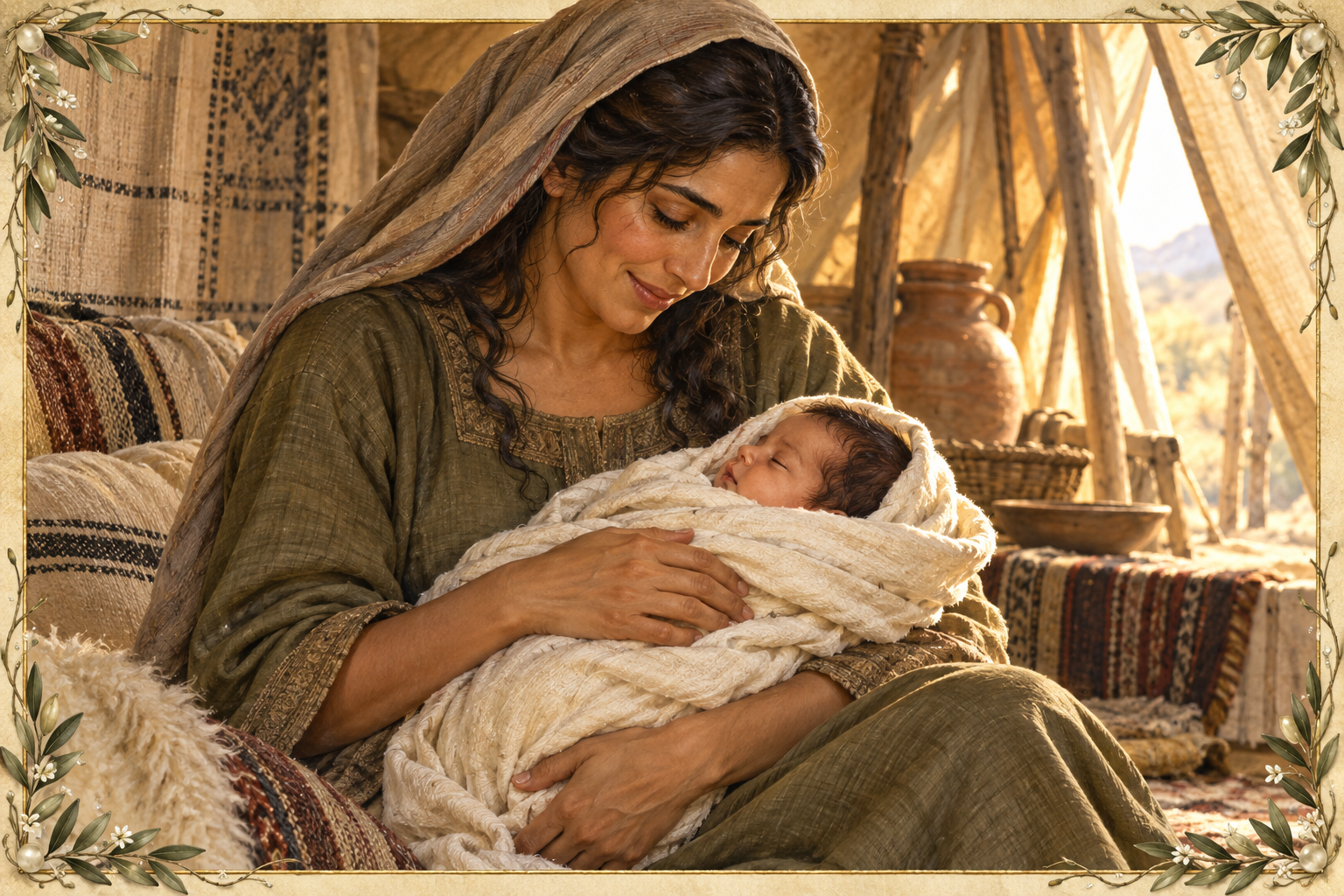
Then Judah is born, and Leah says, “Now will I praise the LORD.” For this moment, her words turn toward God Himself. There is a gift to receive, a mercy to name, a Lord to thank.
Scripture does not tell us that every hurt was healed that day. The next chapter still holds family tension and longing. Her praise belongs inside an unfinished story. That is part of its tenderness: gratitude does not require her life to have become painless.
Perhaps our own thanksgiving can begin that quietly. Not by calling sorrow good, or forcing a cheerful face, but by bringing our whole heart before the One who sees. We can name what hurts and still whisper, “Lord, thank You for this kindness.” He does not need us to hide our tears in order to hear our praise.
And there is more mercy in Leah’s story than she could see. Matthew’s genealogy places Judah in the family line of Jesus Christ. Across the generations, God’s saving purpose reaches toward His Son. Our hope rests in Him—not in our ability to make every part of life come right.
Behold the Lord who saw Leah. His kindness is worthy of our praise, even here, before the story is finished.
A Prayer
Father, You see the places in us that still ache. Thank You that we do not have to disguise them before You. Open our eyes to Your kindness today, and let our thanksgiving be honest and tender. Where we have made another person’s approval the measure of our worth, draw us close to Jesus. Teach us to receive Your love and offer You praise in the middle of our unfinished story. In Yeshua’s name, Amen.
My Stone of Remembrance: My story can be unfinished, and my praise can still be sincere.